

Austin ISD budget deficit: New proposal reduces budgets, changes class sizes

Austin ISD speaks on proposed budget cuts
Austin ISD is trying to address a projected $181 million budget deficit and has released a new update on their plans.
AUSTIN, Texas - Austin ISD is trying to address a projected $181 million budget deficit and has released a new update on their plans.
What they're saying:
Superintendent Matias Segura announced the plans in a letter to Austin ISD families on Tuesday.
"As we evaluated the potential reductions, our student and family experience guided our decision-making, especially at campuses that have the highest need," Segura wrote. "I want to acknowledge that even with this approach, this $181 million budget deficit will be felt district-wide, and we’re doing everything we can to minimize the impact where possible."
"The approach that we're taking this year is very, very intentional. Every single line within Austin ISD is being examined, every single expense," Segura said in a press conference on Thursday.
"This has been an incredibly difficult work, and we know that there are real impacts to all of these reductions. Ultimately, we must have a balanced budget," Katrina Montgomery, chief financial officer for AISD, said.
Segura says different campuses and grade levels have different needs.
"We need to make sure that those students who historically underserved get what they need to be successful," Segura said.
For those who might be wondering why these cuts are necessary since there are already school consolidations, Segura says a lot of money went into turnaround plans.
"I would tell them those dollars went to support those students who need the support to achieve academically. We've spent those dollars, and if we didn't spend them, then our budget would actually — the deficit would be not $180 million, it would be closer to $200 million," he said.
The president of Education Austin spoke about the possible cuts.
"The teachers, the employees, the people that are working for kids are the most important people in this school district, and we can't lose any of them," said Ken Zarifis, president of Education Austin. "Some of the early schools that are under a lot of financial and a lot of risk, won't have any changes at all. They maintain the same situation, so the district is trying to create a better situation," said Zarifis.
"That's a real problem, because you're taking away the planning period, you're kicking away the special ed planning, the teacher planning. You really make a very difficult situation for a teacher that we don't want to see with any teacher," Zarifis added.
The breakdown
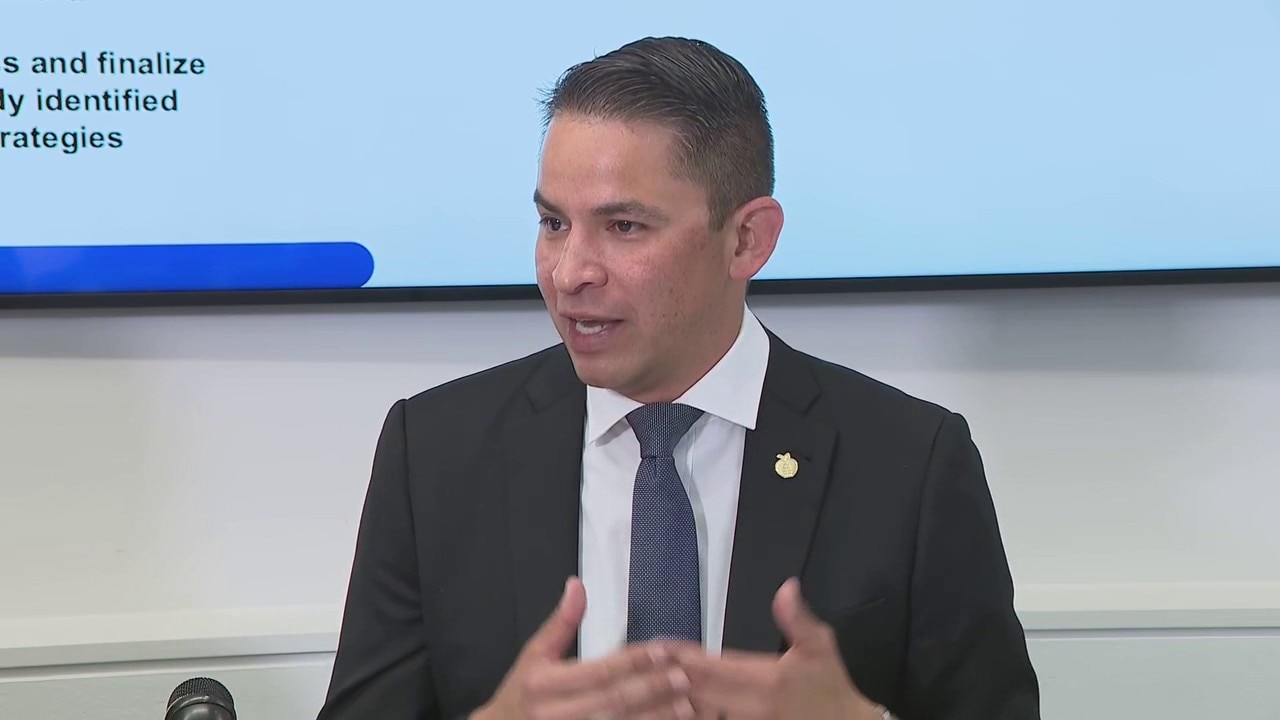
Austin ISD on proposed budget cuts
Austin ISD's superintendent and chief financial officer spoke to the media Thursday about proposed budget cuts and changes to address a projected $181 million deficit.
By the numbers:
Segura says the cuts were determined by what was legally required by state and federal law and required by district policy, then by the impact on students.
Proposed cuts/revenue
Austin ISD has so far identified these proposed reductions:
- $73.8 million to central and department budgets (including eliminating vacancies)
- $33.9 million to campus budgets
The district is anticipating $45 million in real estate revenue.
It is also anticipating limited additional impacts on campus budgets and will not be proposing eliminating librarian or counselor positions.
At a press conference Thursday, Superintendent Matias Segura said 215 positions could be cut: 85 from elementary schools, 51 from middle schools, and 79 from high schools. Segura emphasized that those are allocations of staff for campuses based on enrollment numbers, and some positions are vacancies.
"It's a reduction in allocations, right, which is an FTE, which is a position, and we're reducing it. We're cutting the positions out of the budget," he said. "At the end of the day, we have hundreds of vacancies in elementary. We have vacancies everywhere. It's everywhere."
Impacts on students, teachers
There will also be changes to student-to-teacher ratios and teacher planning times.
Schools have been separated into four "bands" based on how much the campus will be impacted by reductions. The campuses that will see minimal if any changes are in Bands 1 and 2, as these are campuses with active or pending TEA turnaround plans or Unacceptable ratings.
Segura says, "This ensures our commitment to support the ongoing improvements we’ve seen as a result of the increased investment in these schools."
Both elementary and secondary schools are facing a proposed two-year phased plan over the next two school years, 2026-27 and 2027-28.
Elementary Campuses
Year 1 (2026-27)
Elementary campuses will not change planning times for teachers and instead could see increased class sizes.
All Band 1 campuses will retain current ratios while Band 2 campuses will retain ratios but may be subject to change at the superintendent's discretion.
Band 3 and 4 campuses will increase class sizes to:
- PK3 17:1
- PK4-1st Grade 22:1
- 2nd-4th Grades 24:1
- 5th Grade 27:1
Year 2 (2027-28)
Band 1 campuses will retain current essential areas time to allow teachers additional planning time.
Band 2 campuses with an Unacceptable Rating (D or F) will retain additional essential areas; however, exceptions may be made at the superintendent’s discretion.
All other elementary campuses will reduce essential areas and return to a traditional, once-daily planning period.
Secondary Campuses
Year 1 (2026-27)
Campuses with turnaround and restart plans will have teachers teach eight out of 10 class periods to maintain 70 minutes of daily instruction in Math and English-Language Arts.
All other campuses will have a 6.5 of 8 model, meaning teachers in core subjects will teach six out of eight class periods, while teachers in other courses will teach seven out of eight class periods.
Year 2 (2027-28)
Secondary campuses with an Unacceptable Rating will have teachers teaching six out of eight class periods for core subjects and seven out of eight class periods for all other courses. Exceptions may be made at the superintendent’s discretion.
All other secondary campus teachers will be required to teach seven out of eight class periods for all courses.
Impacts on district technology
The district is also proposing changes to how it handles technology, including:
- Transitioning away from 1:1 devices
- Transitioning learning management system from Blend to Google Classroom
- Reviewing and discontinuing software based on usage, alignment with academic vision
- Transitioning from Naviance student transcript software to existing SchoolLinks software

AISD details impact of proposed cuts
Austin ISD is trying to address a projected $181 million budget deficit and has released a new update on their plans.
What's next:
The district is continuing an in-depth review of the following areas:
- Athletics
- Fine Arts
- Stipends
- Health services
- Student support services contracts
- Austin ISD Police Department
- IT
- Transportation
- Superintendent and Chief of Staff organizations
Those reviews are expected to be finished by the end of the week.
The final plan will be voted on by the school board on June 18.
What you can do:
Those wishing to give feedback on the proposed plans are encouraged to fill out a budget comment card. The comment card form will be open until June 18 at 5 p.m.
For more information on how you can get involved in the process, click here.
For more information on AISD's budget process, click here.
The district says the earlier you enroll your children, the better, so they have clearer enrollment numbers for how to allocate staff.
The Source: Information in this report comes from Austin ISD